
Water Pressure Services in King County
Struggling with weak showers, slow-filling fixtures, or inconsistent water flow? Water pressure problems affect your daily comfort and can indicate serious plumbing issues.
Lighthouse Plumbing diagnoses and resolves water pressure problems for homeowners throughout Issaquah, Fall City, Snoqualmie, and King County. Whether your pressure is too low, too high, or fluctuates unpredictably, our experienced plumbers will identify the cause and implement the right solution. In Fall City, where our shop is, we gauge the house and set or replace the pressure-reducing valve the same day: see our Fall City water pressure page.
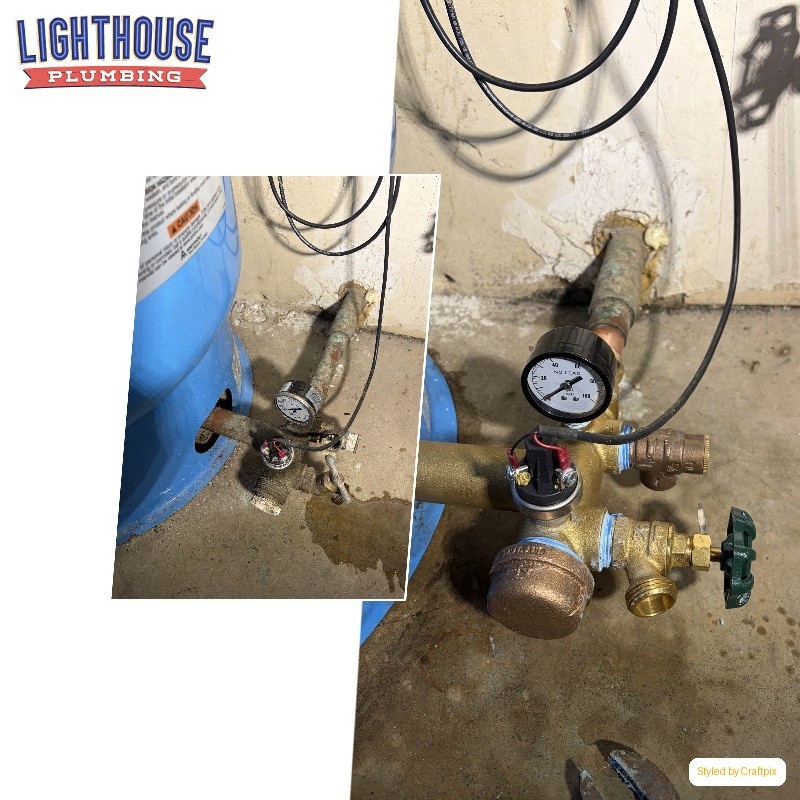
Our Water Pressure Services
Pressure Diagnosis
We test your system to measure actual pressure and identify exactly what's causing your problems.

Pressure Regulator Installation
We install or replace pressure reducing valves (PRVs) to maintain safe, consistent pressure.

Pressure Regulator Repair
Failing regulators cause pressure spikes or drops. We repair or replace them promptly.
Pipe Inspection
Corroded or clogged pipes restrict flow. We inspect your system to find hidden restrictions.
Well Pump Services
For homes on well water, we service pressure tanks and well pump systems.
Whole-Home Solutions
From repiping to pressure boosting systems, we solve even the most challenging pressure problems.
Common Water Pressure Problems
Low Water Pressure
Symptoms:
- • Weak shower spray
- • Slow-filling toilets and washing machines
- • Faucets that barely trickle
- • Long wait times for hot water
Common causes:
- • Corroded or clogged pipes
- • Failing pressure regulator
- • Municipal supply issues
- • Partially closed valves
- • Leaks in your system
High Water Pressure
Symptoms:
- • Banging pipes (water hammer)
- • Running toilets
- • Dripping faucets
- • Appliance failures
- • Shortened water heater life
Common causes:
- • Missing or failed pressure regulator
- • Municipal pressure spikes
- • Thermal expansion issues
Fluctuating Pressure
Symptoms:
- • Pressure changes throughout the day
- • Sudden drops when using multiple fixtures
- • Inconsistent shower temperature
Common causes:
- • Failing pressure regulator
- • Well pump issues
- • Undersized supply lines
- • Municipal supply variations
The Importance of Proper Water Pressure
Why Low Pressure Is a Problem
Low pressure isn't just inconvenient—it may indicate hidden leaks wasting water, pipe corrosion or blockages, or failing plumbing infrastructure.
Why High Pressure Is Dangerous
Pressure over 80 PSI can cause premature appliance failure, water heater damage, burst pipes and flooding, wasted water and higher bills, and fixture and valve damage.
Ideal residential water pressure is 40-60 PSI.
Our Diagnostic Process
Pressure Testing
We measure your water pressure at multiple points in your home
System Inspection
We check valves, regulators, and visible piping
Cause Identification
We determine whether the issue is inside your home or from municipal supply
Solution Recommendation
We explain your options with clear pricing
Professional Repair
We implement the right fix for lasting results

Frustrated with Your Water Pressure?
Don't settle for frustrating water pressure. Contact Lighthouse Plumbing today for professional diagnosis and repair.
Frequently Asked Questions
What is normal water pressure for a home?
Normal residential water pressure is 40-60 PSI. Pressure below 40 PSI feels weak; pressure above 80 PSI can damage your plumbing.
Why is my water pressure suddenly low?
Sudden pressure drops may indicate a leak, a burst pipe, a municipal supply issue, or a failed pressure regulator. Call us for a diagnosis.
What is a pressure reducing valve (PRV)?
A PRV is a device that reduces incoming water pressure to a safe level for your home. Most homes have one where the main water line enters. They typically last 7-12 years.
Can I increase my water pressure?
Yes, depending on the cause. We may be able to adjust your PRV, clear blockages, repair leaks, or install a pressure booster system.
Why do I have good pressure downstairs but weak pressure upstairs?
This is common in multi-story homes and may indicate undersized pipes, pipe corrosion, or pressure that's too low to push water upstairs effectively.
Does low water pressure waste water?
Counterintuitively, low pressure often indicates leaks that waste significant water. High pressure definitely wastes water through running toilets and dripping faucets.