
Lining is usually the better buy for a Seattle side sewer that is cracked or full of roots along much of its length but still holds its shape. Digging is cheaper for one bad spot and the only real fix for a collapsed or sagging section. Every Seattle sewer we lined this year needed a little of both.
On our 2025 and 2026 Seattle invoices, digging down to repair a section or add a cleanout ran about $4,500 to $6,500, and lining a side sewer about $16,500 to $20,000, tax included. Which one your sewer needs comes from the camera, not the symptom. Here is how the choice works, using the Seattle jobs behind those numbers.
The Two Ways to Renew a Side Sewer
In Seattle the side sewer is yours from the house to the public main, usually under the street, and Seattle Public Utilities describes four ways to repair it. They fall into two families.
Digging: spot repairs and open trenches
A spot repair digs a hole where one defect is, such as an offset joint or a broken piece, and replaces that section. An open trench digs up a long run of pipe and replaces it. Both put new pipe in the ground and both disturb whatever is on top of it.
Where it wins: one defect in an otherwise sound pipe, a collapsed section, or a sag that holds water. A dig is also how you add a cleanout, which a lining job usually needs anyway.
Where it hurts: the length of the line, its depth and what sits on top of it. A trench under a driveway, a mature tree or a sidewalk costs more to dig and more to put back.
Lining: a new pipe inside the old one
A cured-in-place liner is a resin-soaked tube pulled or blown into the old pipe and cured there, leaving a seamless new pipe inside it. SPU notes that it disturbs less of the surface than open digging and that the seamless result can keep roots out. Pipe bursting, which pulls a new pipe through the line of the old one between a pit at each end, is the other trenchless method SPU lists.
Where it wins: a long run of cracked, root-damaged concrete or clay that still holds its shape, under things you don't want dug up.
Where it can't help: a section that has collapsed, a sag or belly, or an offset too large to pass. A liner follows the old pipe, so a low spot stays low.
What Our Seattle Jobs Show
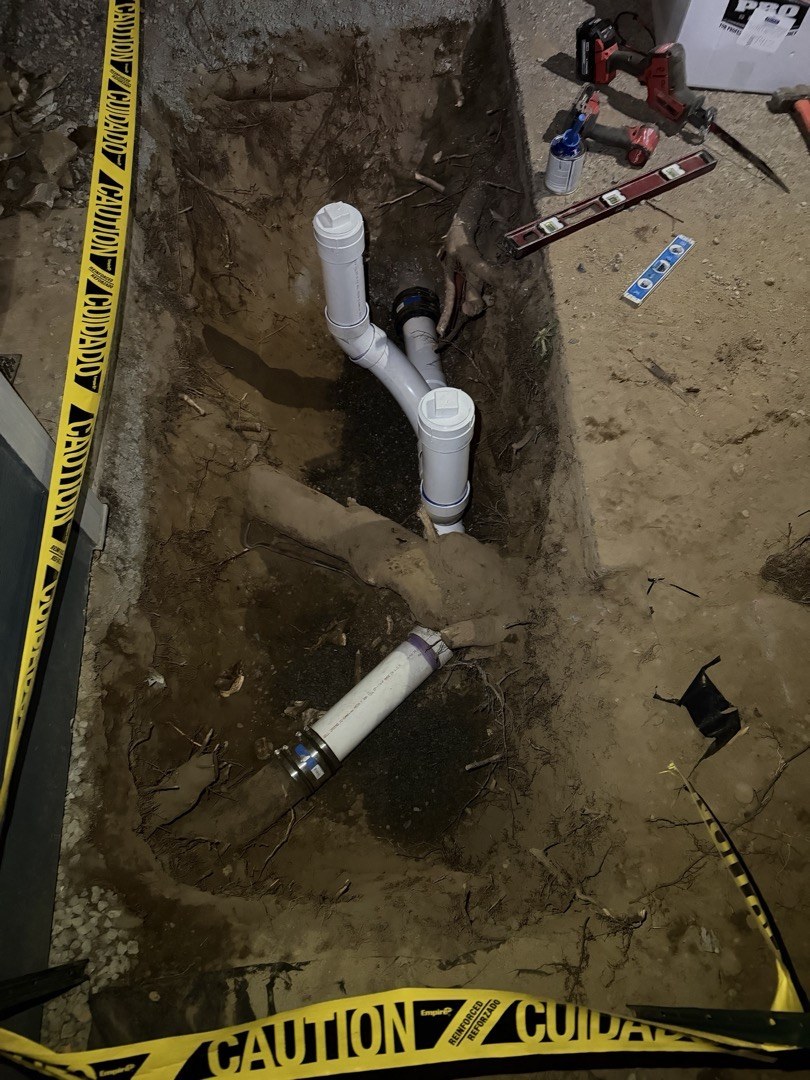
A dig and a cleanout to get past a blockage, September 2026. At a house in northeast Seattle, our cable couldn't get past an obstruction about 30 feet out from the cleanout. With the spot marked on the first visit, Caleb dug a trench up to five feet long there, exposed the pipe and installed a new cleanout, giving us a second way into the line to keep clearing it and see what the pipe needed. It came to about $6,250 with tax, including extra digging the site called for.
A dig at the house and 50 feet of liner in Rainier View, September 2026. Roots had broken into the line where the cast iron leaving the house met the old concrete side sewer. The crew dug a pit about 2 feet deep at that joint, removed the damaged section, put in a double cleanout for access in both directions, jetted the concrete clean and lined about 50 feet of it toward the city main. It came to about $17,000, permit and inspection fees included. Our Seattle sewer page tells this job in full.
86 feet of liner and 7 feet of new pipe in Greenwood, September 2026. The side sewer behind this house was about 86 feet of old concrete, 4-inch for 52 feet and 6-inch for the last 34 to the main, and it kept backing up. Bradyn dug down at the back of the house and lined the whole run. With the pipe exposed, the camera found 7 more feet of old concrete between a wye and the foundation, which was replaced with new PVC rather than left for later. Together it came to about $20,000.
Under a sidewalk, quoted in October. In Wallingford, a 120-foot, 6-inch line runs out under the sidewalk to the main, and fixing it means removing a sidewalk panel, digging 4 feet down in the right-of-way to make a spot repair, lining the run and pouring new concrete. That work was quoted at $26,000 before tax, which is what a right-of-way location does to the price.
The pattern: both Seattle linings we did this year started with a dig, either to make an access point or to replace a piece the liner shouldn't be asked to fix. Neither went in without a shovel.
What Decides the Price in Seattle
- Length. The longer the run, the more liner and the more time; Greenwood's run was 86 feet, Rainier View's about 50.
- Depth and the surface on top. Lawn is cheaper to dig than a patio, a driveway or a sidewalk, and anything in the right-of-way also needs a Seattle Department of Transportation permit.
- The pipe's shape. Sags, collapses and big offsets need digging, which adds to a lining job or replaces it.
- Access. A usable cleanout near the house saves a dig; no cleanout means making one.
- Permits. Seattle's side sewer repair permit for private property generally costs $280, and every lining job needs one.
Sewer Lining Questions
Can a liner fix a sag or belly in a side sewer?
No. A liner takes the shape of the pipe it goes into, so a section that sags still holds water and solids after it is lined. A belly has to be dug up and relaid at the right slope, and the rest of the line can then be lined, the pattern our Seattle jobs followed.
Why does a sewer lining job still need a dig?
Because the liner needs a way in, and usually a cleanout to service the line afterward. In Rainier View the crew dug a 2-foot-deep pit at the joint the roots had broken, replaced that piece and set a double cleanout there, then lined about 50 feet from it toward the main.
Can we use our toilets on the day the liner goes in?
Not for a few hours. On the Greenwood job, the house couldn't send any water down the line for about six hours while the liner cured, so plan the day around it or step out for the afternoon. The estimate for that job planned two to three days in all, depending on what the dig turned up.
Will Seattle inspect a lined side sewer?
Yes. Seattle's building department says every liner installation needs a side sewer permit, with the inspector notified at inspection time, and the inspection includes a live camera look at the lined pipe. The contractor also has to keep the liner from extending into the city's main, because the city removes a protruding liner and bills for it.
Does a liner keep roots out for good?
It keeps roots out of the joints, which is where they get in. The liner forms one seamless pipe with no joints for roots to find, as SPU notes. The roots already in the old pipe are cleared and the line is jetted before the liner goes in, as it was in Rainier View, so the new pipe starts clean.
Our Recommendation
Get a camera inspection before you get a price. If the camera shows one break, a sag or a collapsed spot in a pipe that is otherwise sound, dig and fix that section; it is the cheaper repair by a wide margin. If it shows cracks, roots or failing joints along most of the line and the pipe still holds its shape, line it, and plan on a small dig at the house to give the liner a way in and replace whatever piece it can't fix. That combination is how we renewed every Seattle sewer we lined this year, and it is usually the honest answer to lining versus replacement.
Get a Camera on the Line First
Call 425-549-2400 or schedule an appointment.
More: sewer line repair in Seattle · sewer line questions and costs · a sewer scope before you buy · why sewers back up in the rain · plumbing in Seattle