
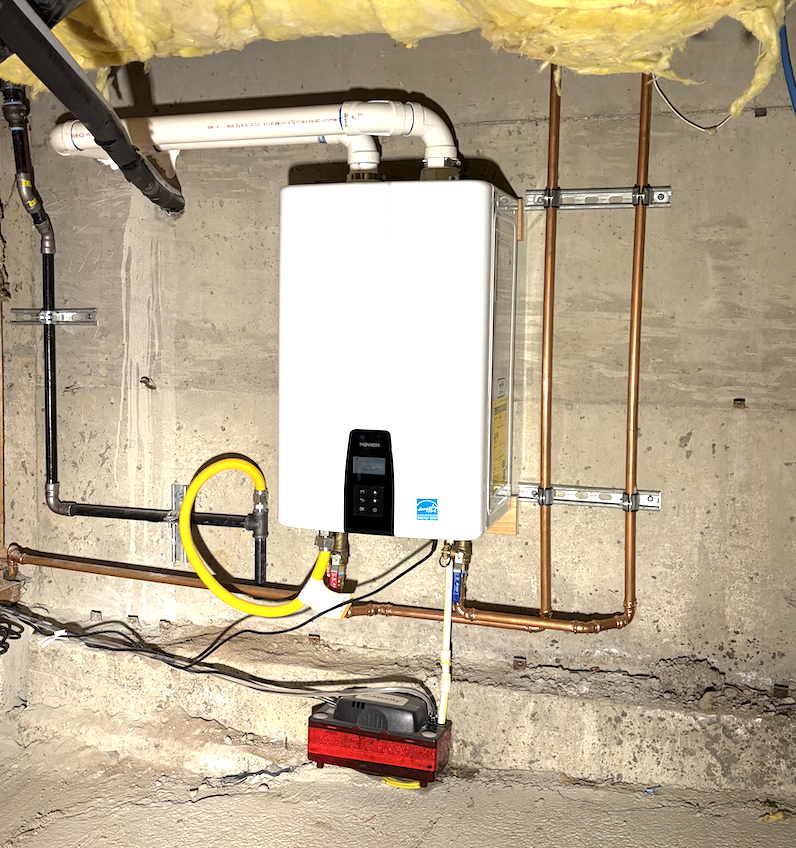
Choosing between a tankless and traditional tank water heater is one of the biggest decisions Eastside homeowners face when it's time for a replacement. Both options have their place, and the right choice depends on your household size, hot water usage, budget, and long-term goals. Here's an honest breakdown from your local water heater installation experts to help you decide.
Tank Water Heaters: The Traditional Choice
Tank water heaters have been the standard in American homes for over a century. They store 40-80 gallons of hot water in an insulated tank, keeping it ready whenever you need it.
Pros of Tank Water Heaters
- Lower upfront cost: Tank water heaters typically cost $2,500 to $5,000 installed, making them the more budget-friendly option initially.
- Simpler installation: If you're replacing an existing tank unit, installation is straightforward—often completed in 2-4 hours.
- Reliable technology: Tank heaters are well-understood, easy to repair, and most plumbers can service them.
- Works with any flow rate: Unlike tankless units, tanks don't struggle with low-flow fixtures or multiple simultaneous uses in smaller homes.
Cons of Tank Water Heaters
- Higher energy bills: The tank constantly heats water, even when you're not using it—this "standby heat loss" adds up.
- Limited hot water supply: Once the tank is empty, you'll wait 30-60 minutes for it to reheat.
- Shorter lifespan: Tank water heaters typically last 8-12 years, compared to 15-20 years for tankless.
- Larger footprint: A 50-gallon tank takes up significant space in your garage, basement, or utility closet.
Tankless Water Heaters: The Modern Alternative
Tankless (or "on-demand") water heaters heat water only when you turn on the faucet. There's no storage tank—cold water flows through a heat exchanger and comes out hot.
Pros of Tankless Water Heaters
- Endless hot water: As long as you have gas or electricity, you'll never run out of hot water mid-shower.
- Lower energy costs: No standby heat loss means 24-34% more energy efficiency for most homes, according to the Department of Energy.
- Longer lifespan: Tankless units last 15-20 years with proper maintenance—nearly double a tank heater.
- Space savings: Wall-mounted units free up valuable floor space in your Sammamish or Bellevue home.
- Cleaner water: No tank means no sediment buildup sitting in your hot water supply.
Cons of Tankless Water Heaters
- Higher upfront cost: Tankless installations typically run $5,000 to $8,000, including any necessary gas line or electrical upgrades.
- Flow rate limitations: Most residential tankless units deliver 2-5 gallons per minute. Running multiple hot water fixtures simultaneously can exceed capacity.
- Cold water sandwich: You may experience brief bursts of cold water between hot water uses—a quirk of on-demand heating.
- More complex installation: Tankless units often require electrical upgrades, larger gas lines, or new venting, adding to installation time and cost.
How Much Does Each Type Cost?
Here's what Eastside homeowners can typically expect:
| Cost Factor | Tank Water Heater | Tankless Water Heater |
|---|---|---|
| Equipment | $1,000 - $2,500 | $2,000 - $4,000 |
| Installation | $1,500 - $2,500 | $3,000 - $4,000 |
| Total Installed | $2,500 - $5,000 | $5,000 - $8,000 |
| Annual Energy Cost | $400 - $600 | $250 - $400 |
| Lifespan | 8-12 years | 15-20 years |
Costs vary based on unit size, fuel type, and installation complexity. We provide detailed quotes before any work begins.
Which Is Right for Your Home?
Choose a Tank Water Heater If:
- Budget is your priority: You need reliable hot water without a large upfront investment.
- Your home already has a tank: Replacement is simple and cost-effective.
- You have moderate hot water needs: A properly sized tank handles most households just fine.
- You're selling soon: The lower cost makes sense if you won't be around to enjoy the long-term savings.
Choose a Tankless Water Heater If:
- You have a large household: Families with 4+ people who frequently run out of hot water benefit most from endless supply.
- You're staying long-term: The energy savings and longer lifespan pay off over 10+ years.
- Space is limited: Condos, smaller homes, or anyone wanting to reclaim garage/utility space.
- You value efficiency: Lower monthly bills and reduced environmental impact matter to you.
- You're building new or remodeling: It's easier to install tankless when you're already doing electrical or gas work.
What About Heat Pump Water Heaters?
Heat pump water heaters are a third option worth considering—especially for Eastside homeowners focused on efficiency. They use electricity to move heat from the air into the water, making them 2-3 times more efficient than conventional electric tanks. They cost more upfront ($2,000-$4,000 installed) but qualify for federal tax credits and utility rebates. The trade-off? They need space with adequate airflow and work best in unconditioned spaces like garages.
Frequently Asked Questions
How long does a tankless water heater last?
Tankless water heaters typically last 15-20 years with proper maintenance, compared to 8-12 years for tank models. Annual descaling (especially important with harder water) helps maximize lifespan.
Can a tankless water heater handle multiple showers at once?
It depends on the unit's flow rate (measured in GPM). Most whole-house tankless heaters deliver 8-11 GPM, which can handle 2-3 showers simultaneously. We'll size your unit based on your household's peak demand.
Will I save money with a tankless water heater?
Most homeowners save $100-$200 per year on energy costs. Whether that offsets the higher upfront cost depends on how long you stay in your home. The break-even point is typically 8-12 years.
Do tankless water heaters work during power outages?
No—even gas tankless units require electricity to operate the ignition and controls. If outages are common in your area, a tank water heater (gas models work without power) may be more reliable.
What maintenance does a tankless water heater need?
Annual flushing with vinegar or a descaling solution removes mineral buildup. This is especially important in areas with harder water. We offer maintenance services to keep your unit running efficiently.
Our Recommendation for Most Eastside Homes
For the typical Issaquah, Sammamish, or Bellevue household, we often recommend tankless for larger families (4+ people) who run out of hot water regularly and plan to stay in their home long-term. The endless hot water and energy savings make the higher upfront cost worthwhile.
For smaller households, budget-conscious homeowners, or those replacing an existing tank, a high-efficiency tank water heater is often the smarter choice. Modern tank heaters are more efficient than ever, and the lower installation cost keeps more money in your pocket.
The truth? There's no universally "better" option—just the right option for your situation. That's why we take time to understand your household's needs before making a recommendation.
Ready to Decide? Let's Talk.
At Lighthouse Plumbing, we install both tank and tankless water heaters throughout the Eastside—Bellevue, Redmond, Sammamish, Issaquah, Kirkland, and surrounding King County communities. We'll assess your home, discuss your hot water needs, and give you an honest recommendation (not a sales pitch).
Need Help Choosing a Water Heater?
Contact us today for a free consultation. We'll help you find the right water heater for your home and budget.