
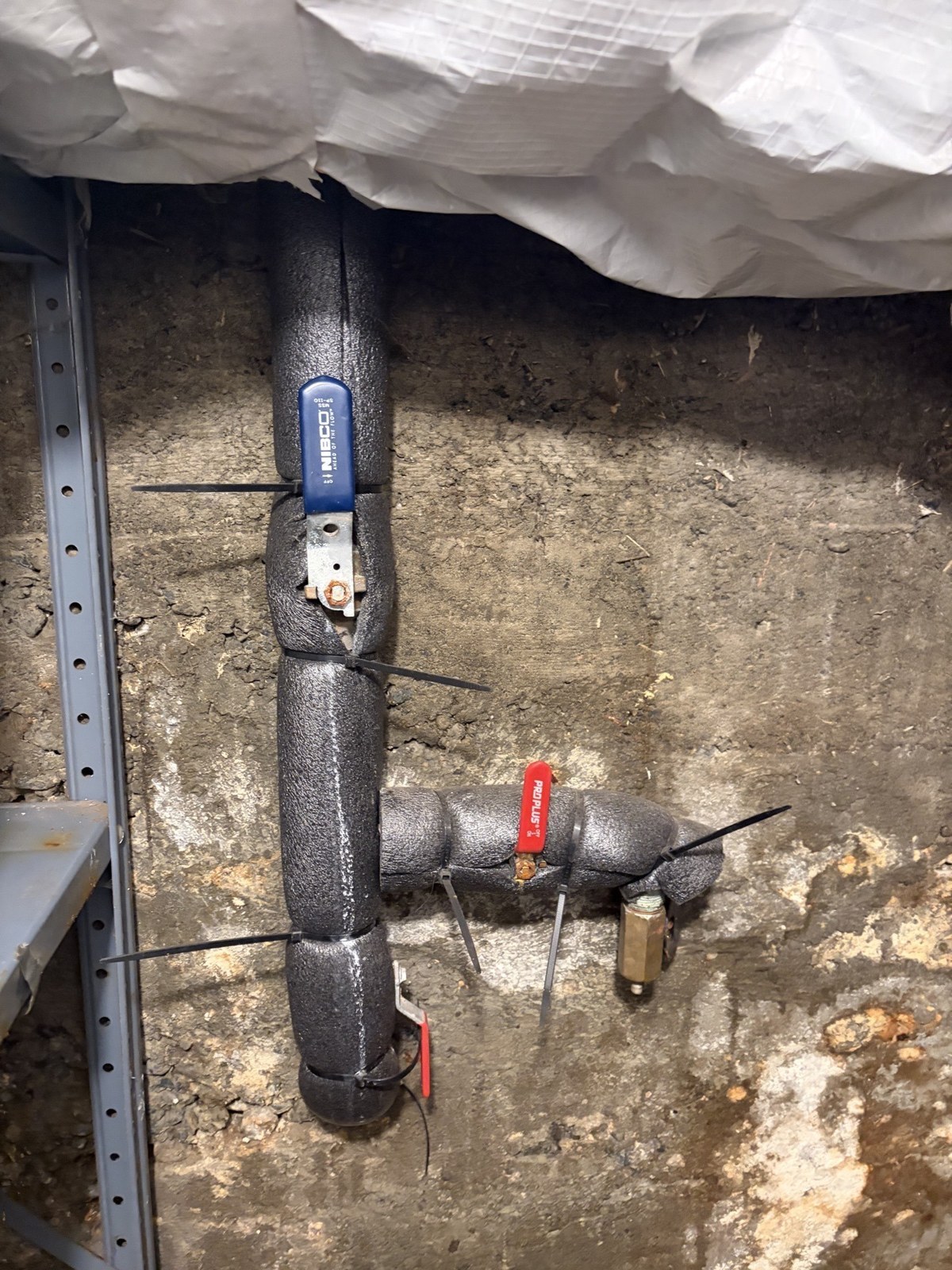
Short answer: if a gauge on your hose bib reads above 80 psi, yes, and the fix is almost always the pressure-reducing valve where the main enters the house. Below are the pressure questions we hear most, answered from the regulator jobs we did from Kirkland to Duvall in 2026.
Is 90 psi too high for a house?
Yes. Washington's plumbing code requires a pressure-reducing valve wherever static pressure is above 80 psi, and 90 is over that line. In October, Caleb gauged a Kirkland house at 90 psi at a hose bib, replaced its 1-inch regulator in the crawlspace and set the house to 75. At 90, faucets, toilet fill valves and appliance hoses wear out early.
Can I check my own water pressure?
Yes, with an inexpensive gauge that threads onto a hose bib or a washing machine tap. Turn off every faucet and appliance in the house, open the tap with the gauge on it, and read the needle. That is your static pressure. If it reads above 80 psi, call a plumber about the regulator.
Why is my water pressure higher at night?
Because demand on the city system drops at night, so the pressure in the main rises, and a regulator that is worn or failing passes more of that rise into the house. Toilets that refill on their own at 2 a.m. or a relief valve that drips overnight are the usual clues.
A gauge read late in the evening often shows it.
Why are my toilets running and my faucets dripping at the same time?
When several fixtures start failing at once, the cause is often upstream of all of them: water pressure that is too high, or that spikes. In June a Duvall house had pressure spikes throughout, and Bradyn traced them to a failed 1-inch regulator in the crawlspace. Fix the pressure first, then the fixtures.
Can high water pressure damage my water heater?
Yes. High pressure, and pressure that rises every time the heater runs with no expansion tank to absorb it, strains the tank and its relief valve. A relief valve that drips or a tank that fails early can both trace back to pressure. A new regulator usually needs a working expansion tank on the cold line beside the heater.
Why do my pipes bang when I turn off a faucet?
That is water hammer: water moving fast stops suddenly when a valve shuts, and the pipe jumps. High pressure makes it worse, because the water is moving harder when it stops. Washing machines and dishwashers, whose valves snap shut, are the usual triggers. Lowering the pressure often quiets it, and loose pipe straps make it louder.
Can I adjust my pressure-reducing valve myself?
Most regulators have an adjusting screw, and a small turn changes the setting. But if the valve has failed, adjusting it will not hold, and a valve that is decades old can be seized. If your pressure is high and a gauge does not change when the screw is turned, the regulator needs replacing, not adjusting.
My pressure was fine for years. Why is it suddenly high?
Because pressure-reducing valves wear out. Their spring and seat age, and debris in the line can hold a valve partly open, so a house that was fine for years slowly creeps above 80 psi. The water supply itself rarely changes. On a hillside in Issaquah or a crawlspace in Duvall, the answer has been a new regulator.
Get Your Pressure Checked
Call 425-549-2400 or schedule an appointment.
More: water pressure services · water pressure in Issaquah · water pressure in Seattle · water pressure in Fall City · a PRV replacement in Duvall · faucet repair questions