
Water Pressure Services in Fall City, WA
Testing, PRVs and expansion tanks
Lighthouse Plumbing tests and corrects water pressure across Fall City, from the village blocks around our own shop to the plateau along the Redmond-Fall City Road and the houses up at Lake Alice. Most calls come down to one part, the pressure-reducing valve on the incoming line, and because we're based here, a gauge reading and a same-day fix are realistic.
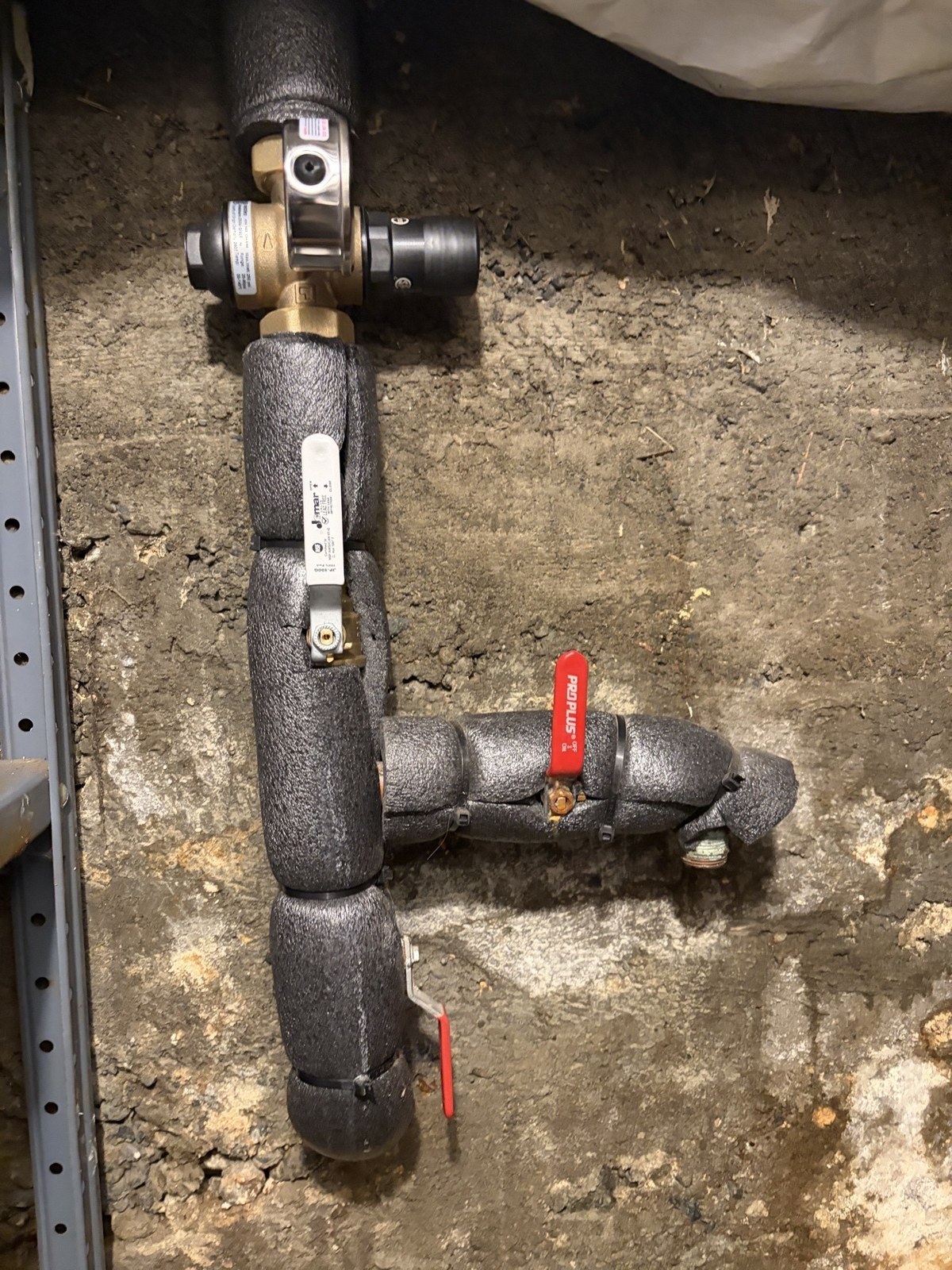
Recent Water Pressure Work in Fall City
In July a homeowner a few blocks from our shop in the village called because the relief valve on the water heater had started discharging. Bradyn put a gauge on the incoming line and read 90 to 100 psi, well above the 80 psi that Washington's plumbing code allows before a regulator is required, and the house had no pressure-reducing valve at all: the main came in through a shutoff and went straight to the fixtures. With the water off for about an hour, he cut a 3/4 inch PRV into the incoming line, replaced the old shutoff below it with a new quarter-turn valve, and set the house to 60 to 70 psi. While he was there he replaced the vacuum breaker on the hose bib at the side of the house, another small part that high pressure wears out early.
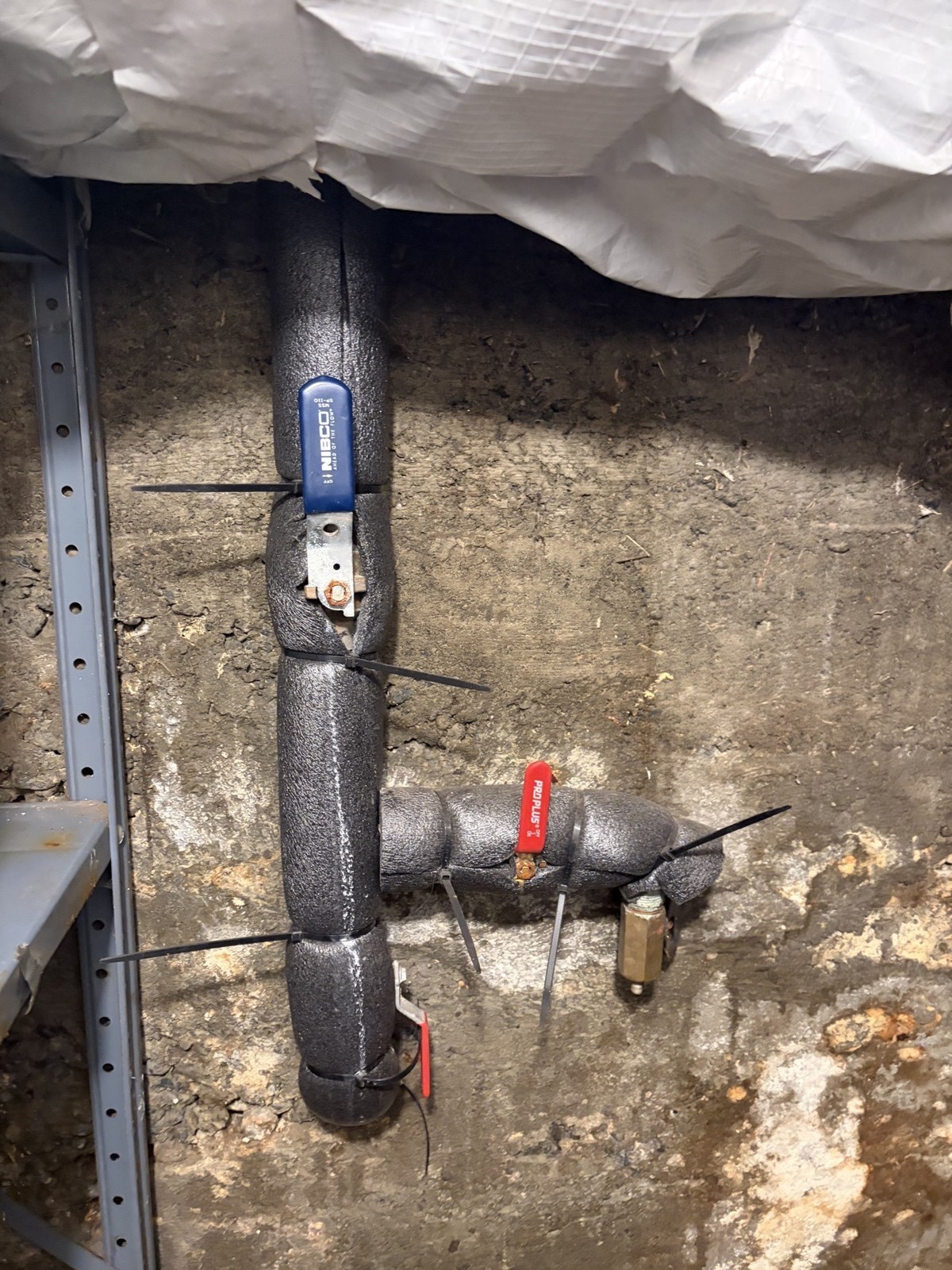
Earlier in the year a smart water monitor did the calling. In April a homeowner on the plateau west of town, off the Redmond-Fall City Road, got a high-pressure alert from the Moen Flo on the main line and asked whether that was normal. Bradyn explained it was one of two things, or both: a failed expansion tank at the water heater, or no pressure-reducing valve on the service. The homeowner chose to fix both: a 1 1/4 inch PRV spliced into the main and set to 75 psi, and a new expansion tank in the existing spot, with the house drained down once.
What We Test and Fix
Pressure testing
Pressure-reducing valve installation
Pressure-reducing valve replacement and adjustment
Expansion tanks
Low pressure, booster pumps and well systems
Fall City-Specific Water Pressure Considerations
District water in the village
Fall City Water District pumps groundwater from its wells to four storage tanks that together hold over 850,000 gallons. For most district customers the static pressure at the tap is set by the height difference between those tanks and the house, not by any dial the district turns. The water itself is at the low end of moderately hard, 68 mg/L, roughly 4 grains per gallon, with no chlorine added, so scale is a slow problem here compared to the wear that high pressure causes.
Wells outside the district
Past the district's lines, Fall City runs on private wells, and a well makes its own pressure: a pump, a pressure tank and a switch, typically set to cycle between 40 and 60 psi. High pressure is rare on a well. The calls we get from well properties are the opposite, sagging or pulsing pressure from a waterlogged tank, a tired switch or a sediment filter that should have been changed months ago.
The valley floor and the plateau
Fall City sits where the Raging River meets the Snoqualmie, with the village on the valley floor and newer houses up the hill toward Lake Alice and out along the Redmond-Fall City Road. On a tank-fed system, elevation is pressure. Two houses on the same street can read differently, which is why we gauge every house instead of assuming the neighbor's number.
The code line, and what it means for your water heater
Washington builds on the Uniform Plumbing Code, and section 608.2 is plain: where static pressure exceeds 80 psi, a regulator is required and the pressure brought to 80 or below, with an expansion tank downstream to handle thermal expansion. Our July reading of 90 to 100 psi in the village is exactly the case the code has in mind, and a water heater living above 80 psi announces it through its relief valve.
Our Process
1. Gauge
We read the pressure at a hose bib with the house quiet, then with water running, and note the reading at the water heater.
2. Quote
You get a firm price for the regulator, the expansion tank if needed, and any shutoff worth replacing while the water is off. You choose.
3. Install or adjust
Most regulator jobs are done in a single visit with the water off for about an hour. Adjusting a sound valve takes minutes.
4. Set and confirm
We set the house to 60 to 70 psi, run the fixtures, and re-read the gauge before we leave, so you know the number your house now lives at.
Frequently Asked Questions: Fall City Water Pressure
How do I know if my water pressure is too high in Fall City?
Put a gauge on a hose bib with the house quiet. Under 80 psi is within code, and 60 to 70 is where we set a regulator. Above 80, or a reading that climbs overnight, means the valve is missing or failing. Faucets that wear out early, a water heater relief valve that discharges, and banging pipes are the tells.
How much does a pressure-reducing valve cost in Fall City?
On our recent valley invoices, adding or replacing a pressure-reducing valve has run about $1,200 to $2,400 including tax. The low end is a 3/4 or 1 inch valve on an accessible main. The high end is a larger valve with a new expansion tank at the same visit. Access in a tight crawlspace moves the price as well.
Why is my water heater's relief valve dripping?
Because the pressure inside the tank is reaching its limit, either from high incoming pressure or from thermal expansion with nowhere to go. Once a regulator makes the system closed, heating water raises the pressure, and the expansion tank is what absorbs it. A dripping relief valve means one of those two parts needs attention, not only the valve itself.
I'm on Fall City Water District water. Why would my pressure be high?
Because district pressure is set by gravity, not by a dial. The district pumps from its wells to storage tanks, and the height between those tanks and your house sets the static pressure at your tap. Homes that sit lower get more of it. The district does not reduce it for you; the regulator at your house does.
I'm on a well in Fall City. Do I still need a pressure-reducing valve?
Usually not. A well system makes its own pressure with a pump, a pressure tank and a switch, typically set to cycle between 40 and 60 psi, so it cannot push street-level pressure into the house. Well calls are almost always the opposite problem: low, pulsing or sagging pressure from a waterlogged tank or a tired switch.
My smart water monitor says my pressure is high. Should I worry?
Take it seriously. Devices like the Moen Flo read pressure on the main line continuously, so they catch the overnight creep that a one-time gauge reading misses. On the April job above, the alert was right: no regulator and a failed expansion tank. We confirm the reading with our own gauge before quoting anything.
Serving Fall City from Fall City
Our shop is on 336th Place SE in the village, so a Fall City pressure call is a few minutes away rather than a trip up the valley. That makes a same-day gauge reading realistic, and a regulator install can usually be scheduled within days. We cover the rest of the valley the same way: Carnation, Duvall, Snoqualmie and North Bend.
More about our Fall City service area · Back to water pressure services
Why Fall City Homeowners Choose Lighthouse for Pressure Work

We read the gauge before we sell a part
A regulator is the right fix for high pressure and the wrong fix for a leak. Ten minutes with a gauge decides which one you have.

We know which houses run high
Village houses below the district's tanks, plateau houses on long private lines, well houses with tired pressure tanks: we've been under enough Fall City floors to know what each usually needs.

We fix the pair, not the part
A regulator without a working expansion tank sends the problem to the water heater. When one is due, we check the other while the water is off, and every job ends with a reading you can write down.
Licensed, Bonded & Insured
Washington Plumbing Contractor License: LIGHTP*762K2
Verify it at secure.lni.wa.gov/verify or see our licensing and insurance page.
Get Your Pressure Read
More: faucet repair in Duvall, where a pressure check starts every call · the Duvall spigot that wouldn't stop dripping · water heaters in Fall City · well and septic plumbing in the valley