
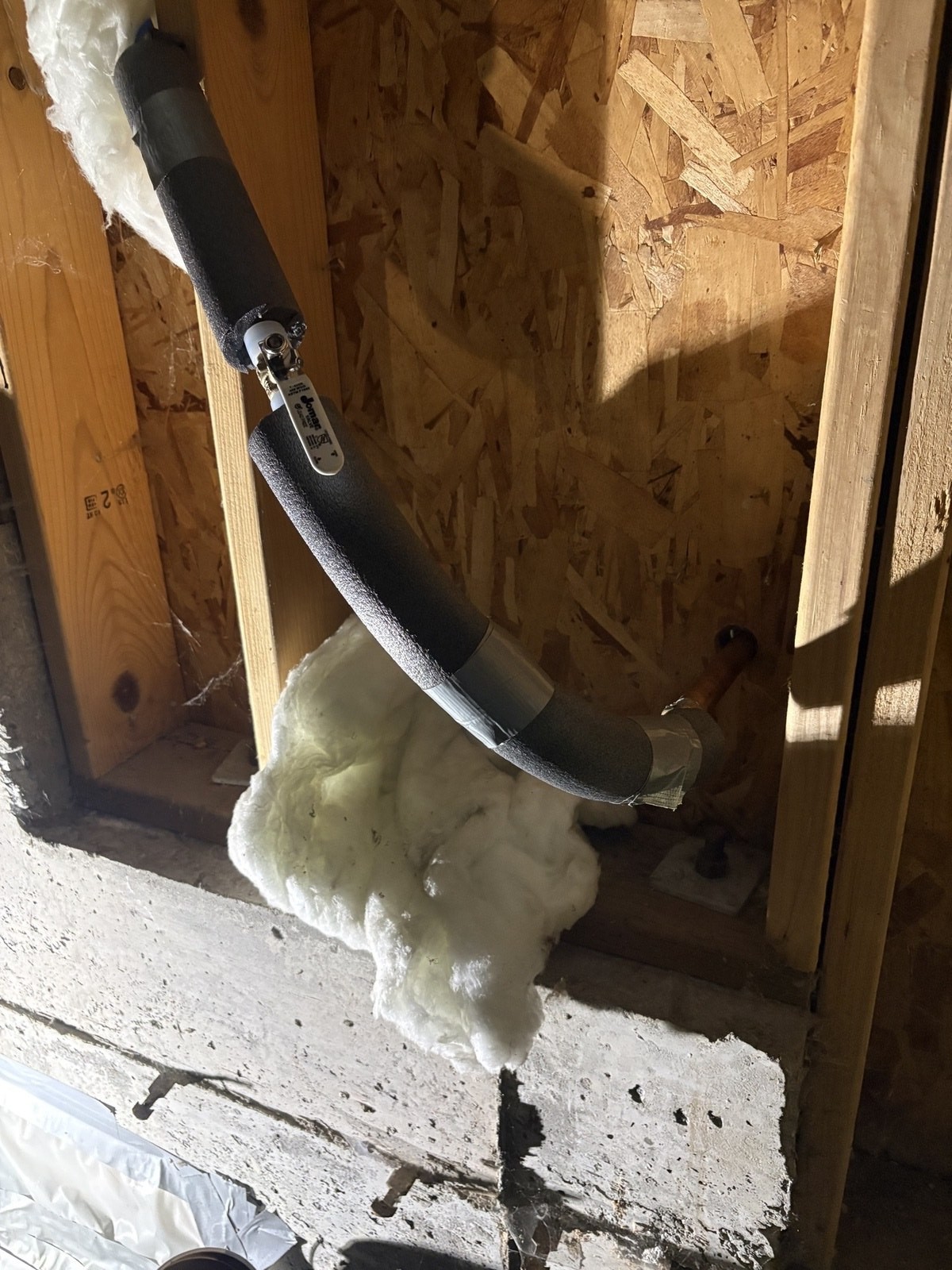
Out here in the valley, a house on a private well and a septic system isn't the exception — it's a normal Tuesday. We're based in Fall City, we live and work on these systems, and we field well and filtration questions almost every week. This guide is the fuller version of what we tell homeowners on the phone: how the well side of your plumbing actually works, what septic changes about your drains, and who to call when something misbehaves. (If you're not sure whether your house is on a well at all, our valley Q&A covers how to tell.)
The well side: what lives between the pump and your faucet
The well pump gets the attention, but most of what determines your daily water experience sits downstream of it — and that's the part a plumber services.
The pressure tank is the blue or gray tank, usually in the garage, crawlspace or well house. It holds a cushion of air that lets the pump deliver water in stored bursts instead of running every time you open a tap. When its internal bladder wears out, the symptoms are unmistakable once you know them: pressure that pulses at the shower, a pump that kicks on and off rapidly (short-cycling), or a tank that feels heavy and sloshes when it should ring hollow at the top.
The pressure switch and gauge decide when the pump runs. A failing switch shows up as water that sags before the pump wakes up, or a system that never quite reaches the pressure it used to. These are serviceable parts — replacing them is routine work, not a crisis.
The filtration train is where well water gets civilized. At minimum that's a sediment filter; depending on your water, it may continue into treatment for iron, hardness or taste. The range we see in the valley runs from a single cartridge housing to whole-home systems, and the right answer depends entirely on what's in your water — which is why we'd rather test than guess. Neglected filters are one of the most common problems we find: a cartridge that should have been changed months ago will choke the whole house's flow and get blamed on the pump.
One boundary to know, and it's a real one: the pump and the well itself belong to a well contractor, not a plumber. We work from the pressure tank inward — and when the fault is genuinely at the pump, we say so and point you to the right trade instead of billing you to find out slowly.
The septic side: what changes about your drains
Septic doesn't make a house fragile, but it does change the logic of drain problems in two ways.
First, diagnosis order changes. In town, a slow drain is almost always the drain. On septic, a slow drain can be the drain — or it can be the tank or the drainfield telling you it's overdue for attention. Before anyone sells you an expensive in-house repair, the question "when was the tank last pumped?" needs an answer, because no amount of drain work fixes a full tank.
Second, the fix has to respect the system. Cabling and jetting are safe for the household lines we work on, but the tank and drainfield are their own specialty: pumping, inspection and field work belong to a septic contractor. We handle the plumbing from your fixtures to the tank, coordinate honestly at that boundary, and won't jet debris toward a field that can't handle it.
And a habit worth keeping: a septic system is a living process, not a garbage chute. Grease, wipes and heavy chemical use all shorten the distance between pump-outs — and on septic, that bill has your name on it.
Who to actually call
The valley's three-trade split confuses everyone at least once, so here's the practical version:
Call a plumber (that's us) when the problem lives in the house or between the systems: pulsing or sagging pressure, a waterlogged pressure tank, filter and treatment questions, slow or backed-up drains, leaks, fixtures, water heaters — and any time you want the problem diagnosed before it's assigned to a trade.
Call a well contractor when the pump itself has died, the well runs dry or muddy, or the problem sits at the wellhead. If you call us first, no harm — recognizing pump-side failure quickly is part of our job, and we'll tell you straight.
Call a septic contractor for pumping, tank and drainfield inspection, and field repairs. If backups keep returning and the tank hasn't been pumped in memory, book that truck before booking anyone's excavator.
When the answer isn't obvious from your description, that's fine — untangling it is the visit. Roughly weekly, someone calls us about "low pressure" that turns out to be a spent filter cartridge, or a "failed pump" that's actually an inexpensive pressure switch. The triage is the value.
What we actually see out here
A snapshot from our own recent work and call logs around Duvall, Carnation and Fall City: filtration consultations from simple sediment setups to full whole-home treatment for well water; pressure-tank and pressure-switch service on systems that had quietly degraded for years; and a steady trickle of well-pump calls that we hand to well contractors after confirming the fault isn't downstream. Fall City itself runs almost entirely on septic — the valley Q&A covers what that means for the business district — so "my drains are slow" conversations here start in a different place than they would in Redmond.
The pattern across all of it: valley systems fail gradually and forgive early attention. The expensive versions of these stories almost always contain the phrase "it had been doing that for a while."
Our Recommendation
Know your system's map before anything breaks: where the pressure tank is, where its shutoff is, what filters you have and when they were last changed. Put a date on the septic tank's last pump-out somewhere you can find it. Change sediment filters on a schedule rather than on symptoms. And when pressure starts pulsing or drains start hesitating, treat it as the system talking to you — the early version of the conversation is short and cheap, and the late version involves excavators.
If you'd like a baseline, we'll walk your system with you, test what's testable, and leave you knowing exactly what you have.
Why does my well water pressure pulse or surge?
Usually the pressure tank. When its air cushion is gone — a failed bladder or lost charge — the pump cycles rapidly instead of delivering smooth stored pressure, and you feel it as pulsing at the fixtures. It's hard on the pump, so it's worth addressing promptly. Diagnosis takes minutes with a gauge and a knuckle-tap on the tank.
Can drain cleaning damage a septic system?
Done thoughtfully, no — cabling and jetting the house lines is routine on septic properties. The care comes at the boundary: we don't drive debris toward a struggling tank or field, and if the real problem is a tank overdue for pumping, clearing the line only rents you a few weeks. Diagnosis first, then the right tool.
How often should a well's sediment filter be changed?
On a schedule, not on symptoms — for most valley households that means every few months, and sooner when the water carries more sediment or the household is large. A spent cartridge strangles flow for the whole house and often gets misread as a pump problem. Write the change date on the housing; your future self will thank you.
Talk to a Plumber Who Lives on These Systems
Call 425-549-2400 or schedule an appointment.
More: water filtration services · water pressure services · leak detection & repair · Snoqualmie Valley plumbing questions · why valley homes need different plumbing · sewer line repair in Fall City · plumbing in Fall City