
A valley house may draw its water from a city spring, a district well or its own well. If it went up around 2000 it may still have its original CPVC, it may sit on a high-pressure hillside or on septic, and it's a long drive from everywhere. Each of those changes what a plumber should check first.
We work out of a shop in Fall City, and a large share of our work is in Duvall, Carnation, Fall City, Snoqualmie and North Bend. These are the six things that make plumbing out here different from plumbing in a Bellevue subdivision, with the jobs that show them.
1. The water comes from a different place on every road
Inside Duvall, the city's water is Seattle's soft Tolt River supply. Inside Carnation, it comes mostly from a spring on city-owned land a mile south of town, backed by a 160-foot community well, and it's chlorinated. Fall City's village is served by the Fall City Water District from wells and storage tanks, with no disinfectant added. Beyond those systems, many homes run on private wells, with a pump, a pressure tank and nobody but the owner testing the water.
That matters before anyone picks up a wrench. Chlorinated city water, an unchlorinated district supply and a private well each wear on fixtures, valves and water heaters in their own way, and a well adds equipment that can be the real cause of what looks like a plumbing problem. Our well and septic guide covers the well side in detail.
2. A lot of the pipe in the walls is CPVC, and it's getting old
Many of the valley houses we work in were plumbed in CPVC, the rigid cream-colored plastic, and CPVC grows brittle with age. This summer we saw what that looks like. In August, Caleb opened a garage wall in a Duvall house and found a cracked fitting on the 3/4-inch hot line. In June and July, Beau replaced failed CPVC elbows in two more Duvall houses, one in a crawlspace and one at a shower valve. Our own estimates say it plainly: old CPVC can crack during a repair or after it, which is why a patch on it is a way to get the water back on rather than a permanent answer.
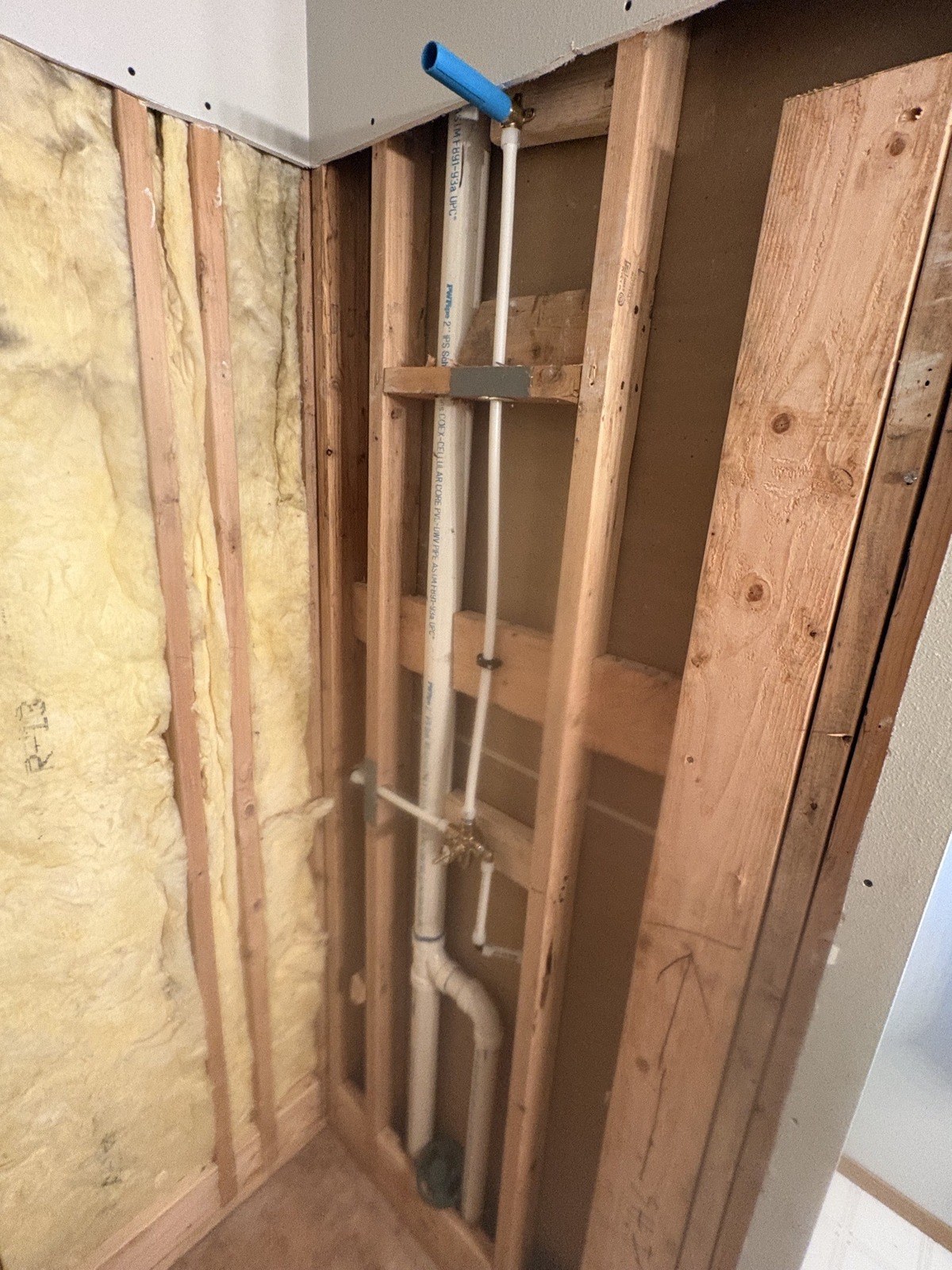
When a job opens up CPVC, we transition to PEX-A or copper rather than glue new joints onto brittle pipe. In May, in a Carnation bathroom that was down to the studs, PJ set a new pressure-balancing shower valve, braced it, raised the shower arm and moved the supply from the house's CPVC to PEX-A. Our Duvall leak repair page tells the CPVC story in more detail.
3. Pressure comes downhill
Many valley houses on hillsides depend on a pressure-reducing valve to keep the water main's pressure off their plumbing, and those valves wear out. In Duvall, a gauge on a hose bib read 75 psi on a valve 20 to 25 years old, as told on our Duvall faucet page. In Fall City, Bradyn found a house seeing 90 to 100 psi and set its new valve to 60 to 70, a job on our Fall City water pressure page. High pressure is hard on every faucet, appliance and fitting in a house, and brittle pipe is the last place you want extra stress.
4. Plenty of water heaters run on propane or electricity
Many of the water heaters we replace in the valley burn propane or run on electricity rather than natural gas. In June, Bradyn replaced a failed 50-gallon propane tank in a Fall City garage, and PJ swapped an old 40-gallon electric tank in the village for a new Rheem. Since July 1, 2026, every replacement water heater in unincorporated King County, which includes Fall City, needs a plumbing permit from Public Health Seattle & King County. Our water heater services and Fall City water heater page have the detail.
5. Septic changes what the drains can take
Fall City has no public sewer, and outside the town sewer systems many valley homes drain to a septic tank. In Carnation, the town's sewer pipes run to King County's treatment plant, which opened there in 2008, but the farms and hillside lots around it are generally on septic. A septic system changes how a drain should be cleared, what a garbage disposal costs the tank, and what should never go down a sink. The well and septic guide covers it.
6. Distance changes how a plumber should work
The valley isn't on the way to anywhere. Carnation is about 15 minutes from our shop and Duvall 25 to 30, so a trip out of the valley for a cartridge, a fitting or a transition coupling costs real time. That's why our trucks carry the common parts, and why we'd rather diagnose fully on the first visit than come back with a guess.
Valley Plumbing Questions
How do I know if my house has CPVC pipe?
Look where the pipes are exposed: under the sinks, at the water heater, in the crawlspace or along a garage wall. CPVC is rigid plastic, usually cream or tan, printed with "CPVC" and often a brand name such as FlowGuard Gold, and joined with glued fittings. PEX is flexible and comes in white, red or blue. Copper is metal.
Can you switch just one room from CPVC to PEX?
Yes. A transition fitting joins the old CPVC to PEX-A at the edge of the work, so a kitchen, a bath or a single run can move to PEX without replumbing the whole house. The transition joint is the one to make carefully, because the CPVC on the other side of it is still the old pipe.
Why does a valley plumber ask where my water comes from?
Because the answer changes the diagnosis. City water, a district supply and a private well each wear fixtures and water heaters differently, and a well adds a pump, a pressure tank and a pressure switch that can be the real cause of a plumbing complaint. One question at the start rules them in or out.
Our Recommendation
Know three things about your valley house: where its water comes from, what its supply pipe is made of, and what its water pressure is. If the pipe is CPVC and it has already cracked, look hard at the pipe around the repair. If it's yellowed or brittle, treat the repair as a stopgap, as our own estimates warn, and get a quote for the permanent fix before the next fitting picks the day for you. If it looks sound, leave it in the wall, keep the pressure in check, and repair fittings as they fail.
Get Your Valley House Looked Over
Call 425-549-2400 or schedule an appointment.
More: Snoqualmie Valley plumbing questions · fall plumbing checklist · repiping services · plumbing in Fall City