
Winter questions in the valley are less about which pipe freezes first and more about what to do with a house: one left empty for the season, one on a well, one on a septic system with a pump when the power goes out. Here are the questions that come up as the cold arrives, answered from our work around Fall City, Carnation and Duvall.
How do I winterize a valley house that will sit empty for the winter?
Choose one of two ways and do it fully. Either keep the heat on at 55°F or above with the water shut off at the main or the well pump, or drain the whole system: water off, every faucet opened, the water heater's power or gas off and the tank drained, and the toilet tanks flushed empty.
Heat-on is simpler, but it depends on the furnace and the power all winter. A full drain-down survives an outage, so it is the safer choice for a cabin or a house nobody will check on. Flushing empties the toilet tanks, not the traps, so a drained house left without heat needs nontoxic plumbing antifreeze in each trap and bowl.
What temperature should we leave the heat at when we go away in winter?
No lower than 55°F, the figure the American Red Cross gives for anyone leaving home in cold weather, and keep it the same day and night. The thermostat only protects heated rooms, so the crawlspace, the garage and the pump house need their own protection, because those are where valley pipes freeze.
Our valley freeze guide walks through those cold spots one by one.
Should we shut the water off when we leave for a winter trip?
Yes, for anything longer than a night or two. On district or city water, close the main valve where the line enters the house. On a well, switch the pump off at its breaker and open a faucet to let the pressure tank drain down, so a burst pipe cannot keep running the pump. Leave the heat on either way.
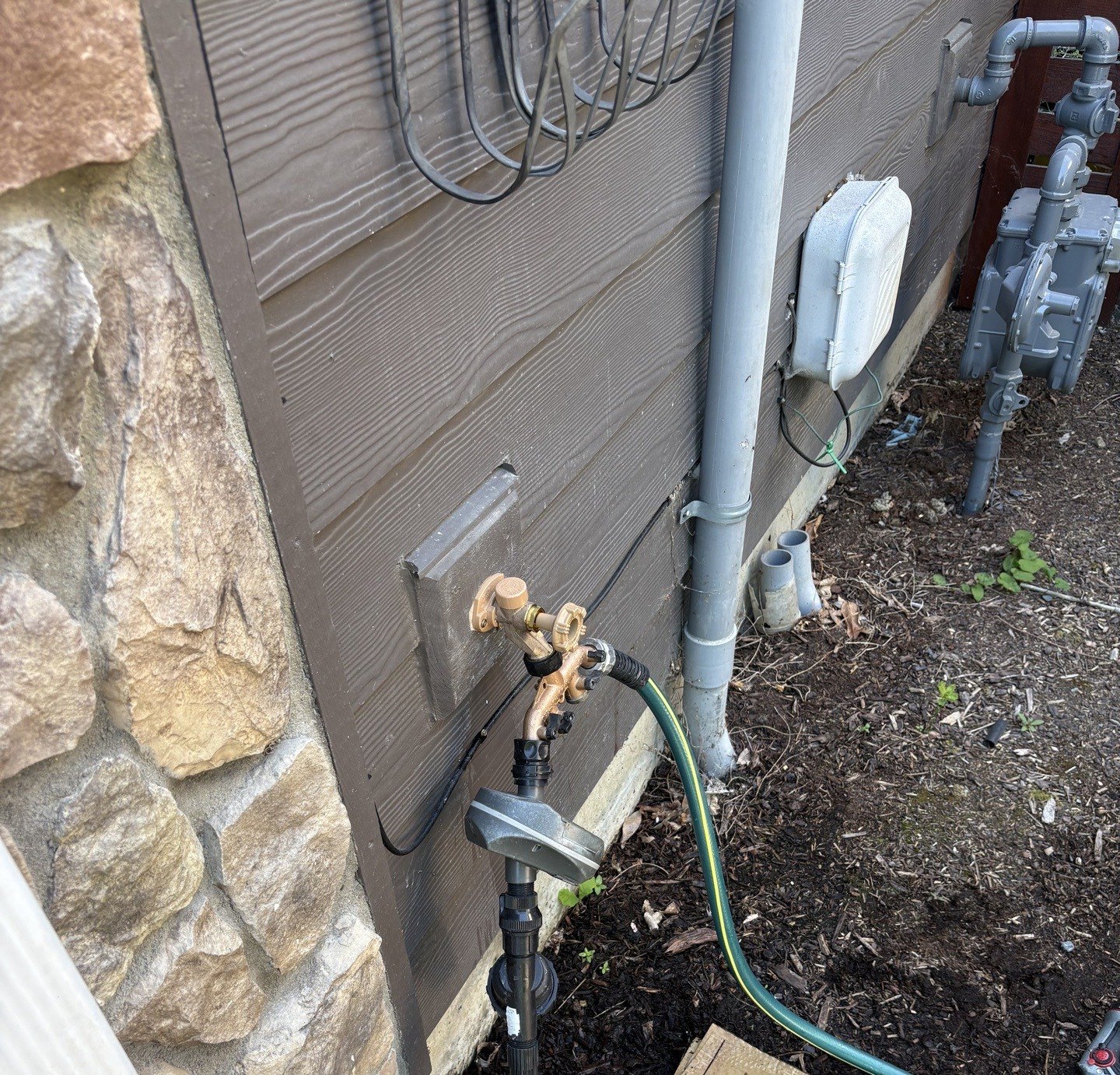
Outside, take every hose, splitter and timer off the hose bibs before you go.
What should we do with the water heater while we're away?
Turn a gas water heater to its vacation setting, which keeps the pilot lit and the tank from freezing without heating for nobody. An electric heater can be turned down or switched off at its breaker. If you are draining the house, turn the power or gas off before the tank is drained: an electric element run dry burns out.
Is a smart water shutoff worth it for a valley house we leave empty?
For a second home or a long trip, it often is. A smart shutoff sits on the main and closes it when it senses a leak, so a split pipe in January runs for minutes instead of days. In February, Bradyn installed one on the 1-1/4-inch copper main of a Fall City house in about two hours.
That job topped $2,800 with tax. The homeowner sets up the app, and the valve needs power and a Wi-Fi signal to report, so it suits a house with both.
Should we have the septic tank pumped before winter?
Not by the calendar. King County's septic guidance is to have the tank inspected and pump it only when the inspection says it needs it, which for most tanks is every three to five years depending on water use. If an inspection is due, autumn is a good time, before the ground is soaked.
How often a system has to be inspected depends on its type, which our Fall City sewer page explains.
Our power went out in a windstorm. Can we use the toilets if our septic system has a pump?
Barely. A pump that has no power cannot move wastewater, so every flush and shower fills the tank or basin until it backs up into the house. King County's guidance is to conserve water during an outage, skip laundry and avoid flushing every time, and to turn the septic pump's breaker off until the power returns.
If a high-water alarm sounds after the power comes back, keep conserving water while the pump catches up. A Cottage Lake ejector pump job shows what happens when a pump stops for good.
How do we turn the water back on after the house sat empty?
Slowly. Close the drain valves and faucets you opened, turn the main or the well pump back on, and let the pipes fill before you open taps one at a time to bleed out air. Refill the water heater completely before turning its power or gas back on, then walk the crawlspace and check every hose bib for drips.
A bib that leaks behind the wall when it is first turned on in spring froze over the winter, as one did in Fall City in May. Our Fall City hose bib page shows what that split looks like.
Get the House Ready Before You Leave
Call 425-549-2400 or schedule an appointment.
More: how to keep pipes from freezing in the valley · hose bib replacement in Carnation · septic-safe habits for valley homes · well and septic plumbing in the valley · fall plumbing checklist